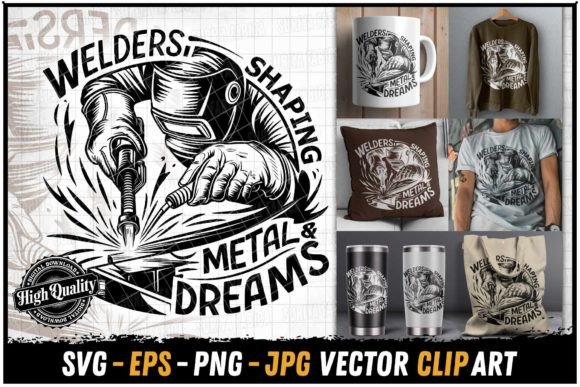
Welders Shaping Metal Dreams Funny SVG Review
As a designer who has spent years translating digital concepts into tangible thread, I approach every new asset with a critical eye. When I first opened the package for Welders Shaping Metal Dreams Funny SVG, my initial thought was about the niche it serves. This is not just another generic industrial graphic; it carries a specific personality that speaks directly to the tradesperson community. The mood is lighthearted yet respectful of the craft, making it an excellent candidate for custom apparel and personalized gifts. However, before committing this design to a machine or listing it in a shop, we need to dissect how it translates from a screen to a stitched reality.
The First Impression: Visual Weight and Layout
The visual composition of Welders Shaping Metal Dreams Funny SVG is bold and straightforward. In the world of Crafts and Graphics, clarity is king. The layout avoids overly intricate micro-details that often get lost when converted into a machine embroidery design. Instead, it relies on strong lines and readable typography, which is crucial for custom apparel where legibility at a distance matters. The "funny" aspect of the title suggests a witty phrase or a playful illustration of welding sparks and tools. This kind of humor works exceptionally well on sweatshirt embroidery or as an embroidered patch for a workshop apron. It feels like a design that would spark a conversation between coworkers or bring a smile to a customer receiving a personalized gift.
When evaluating the shape, I noticed the balance between the text and the graphical elements. For a successful embroidery project, the negative space needs to be managed carefully to prevent thread breakage or puckering. The vector nature of the file ensures that the curves are smooth, which is vital when converting to stitch data. If you are planning to use this for commercial embroidery, the clean lines suggest it will hold up well even after multiple washes, maintaining its professional look without fraying at the edges.
Real-World Application: From Tote Bags to Caps
Let’s imagine a real scenario: I am preparing a batch of merchandise for a local welding supply store. They want to offer unique items for their loyal customers. I decide to test Welders Shaping Metal Dreams Funny SVG on a heavy-duty canvas tote bag. The sturdy fabric provides a stable base, allowing the stitch density to sit flat without sinking into the weave. On a tote, the design acts as a statement piece. Customers can carry it around town, effectively turning the bag into a mobile advertisement for the shop. The humor in the design makes it shareable and memorable, increasing brand engagement.
Now, consider a different application: a baseball cap. Curved surfaces present a unique challenge. The text portion of the design must wrap around the crown without distorting. Because the original digital embroidery file is scalable, I can adjust the size to fit the cap's curvature. However, I would likely reduce the overall size slightly compared to a flat surface to ensure the fill stitch doesn't bunch up. For baby embroidery or children's items, this design might need significant modification to remove any sharp angles or complex tool imagery, focusing instead on the softer, funnier text elements. Safety and comfort are paramount here, so the texture of the stitching must remain smooth against sensitive skin.
For the Etsy seller or small shop owner, this design offers versatility. It fits perfectly into holiday collections, perhaps as a Christmas stocking holder tag or a decorative element on a kitchen towel for a welder enthusiast. The adaptability of the SVG format allows for easy resizing, meaning you can create a mini version for a keychain fob or a large version for a wall hanging. This flexibility is what separates a good design asset from a great one. It allows you to diversify your product line without purchasing multiple files.
Navigating Challenges: Fabric and Technique
While Welders Shaping Metal Dreams Funny SVG is robust, it is not immune to the pitfalls of poor execution. One area requiring caution is the use of textured fabrics. If you attempt to embroider this on a thick fleece or a heavily napped material, the fine details of the text may become obscured. The thread colors must contrast sharply with the background to maintain readability. A dark grey thread on a black sweatshirt will render the design invisible, regardless of how good the file is.
Another consideration is the hoop size. If the design includes a wide arrangement of text and graphics, it may exceed the capacity of a standard 4x4 hoop. In such cases, you will need to split the design or use a larger hoop, which introduces the risk of shifting if the fabric isn't stabilized correctly. Always use a high-quality stabilizer, especially on stretchy fabrics like jersey knit. Without proper backing, the tension required for the satin stitch borders could cause the fabric to pucker, ruining the aesthetic of the finished product.
Be particularly careful with tiny lettering. While the vector file looks crisp on a monitor, translating very small text into stitches can result in a muddy mess. If you plan to downsize this design for a small item like a wristband or a coin purse, review the stitch preview closely. You may need to simplify the font or increase the point size to ensure the message remains clear. Similarly, dense areas of fill stitch should be checked to ensure they don't create a hard, plastic-like feel on the garment, which can be uncomfortable for the wearer.
Professional Tips for Designers and Makers
Before you commit to a full production run, always test the design on scrap fabric first. This simple step saves time, money, and materials. Check the thread color contrast by holding a swatch next to your intended fabric under different lighting conditions. Review the stitch density in your digitizing software to ensure there are no gaps or excessive overlaps. Confirm that your chosen hoop size accommodates the entire design without cutting off essential elements.
Inspect the small details, such as the ends of welding rods or the tips of sparks, to ensure they stitch cleanly. Test the design in black and white printable mockups to visualize the placement before spending hours on the machine. Compare how the design looks on light versus dark fabric backgrounds to determine if you need to add a backing layer or change the thread palette. Use the proper stabilizer for your specific fabric type to prevent distortion.
Finally, check whether the design works for both personal and commercial projects. Confirm the licensing terms before selling finished items or offering the digital file for resale. As a responsible creator, understanding the boundaries of your license protects your business and respects the original artist. By following these practical steps, you ensure that Welders Shaping Metal Dreams Funny SVG becomes a standout addition to your portfolio, delivering value and quality to your customers.