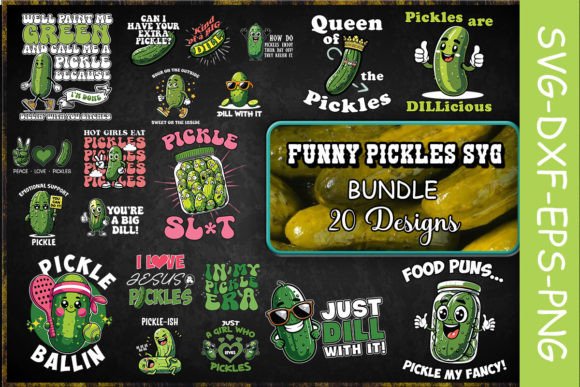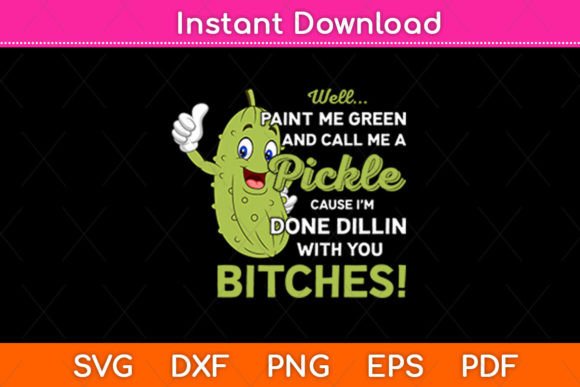
Well Paint Me Green and Call Me a Pickle
First Impressions: Bold, Playful, and Unmistakably Fun
Opening the file for Well Paint Me Green and Call Me a Pickle, the first thing that stands out is its quirky personality. It’s the kind of design that immediately makes you chuckle—a playful SVG with a cheeky message wrapped in a stylized, slightly retro aesthetic. The layout is clean but not minimalist, with enough visual punch to catch attention without overwhelming the garment or item it’s stitched onto.
From a design standpoint, this embroidery file leans into humor and attitude, which makes it perfect for niche markets and personalized gifts. The font treatment is key here—it’s bold and slightly whimsical, giving the whole design a confident presence. If you're looking to inject a bit of personality into a tote bag, sweatshirt, or baby onesie, this one lands right in the sweet spot of “fun but not childish.”
Real-World Use: From Tote Bags to Sweatshirts and Beyond
I recently tested this design on a custom tote bag for a small shop client who wanted something that would stand out at a local craft fair. The result? A hit. The phrase stitched cleanly, and the overall balance of the text and embellishments held up well on medium-weight cotton canvas. It looked sharp, readable, and had that handmade charm that Etsy shoppers love.
When I moved on to a sweatshirt project, the same design adapted beautifully. The satin and fill stitches handled the thicker fabric without distortion, and the message—while cheeky—was still appropriate for a broad audience. That’s a big win for a small business owner or Etsy seller looking to balance humor with marketability.
It also worked surprisingly well on a baby cap, though I downsized it slightly to keep the lettering legible. On a tiny garment like that, clarity matters, and this design held up well under scaling. It’s not your typical baby embroidery, but if you're targeting a parent with a sense of humor, it’s a great option.
Where to Use It Carefully: Fabric, Fit, and Finer Details
While Well Paint Me Green and Call Me a Pickle is versatile, it does have some limitations based on fabric type and application. On stretchy knit fabrics, I noticed a slight distortion in the lettering unless I used a firm stabilizer underneath. This is especially important for commercial embroidery shops where consistency across multiple items is key.
Dark fabrics also require some thought. The original design doesn’t come with a white underlay, so if you’re stitching it onto black or navy garments, you may want to add that in your embroidery software to ensure the text stands out clearly. I’ve seen too many funny designs lost in the shadows because of poor contrast.
Also, be cautious when using this on curved surfaces like caps or baby booties. The corners of the text can get compressed or stretched depending on how the machine compensates for the curve. A quick test stitch on a similar surface can save you a lot of time and frustration later.
Visual Appeal and Practical Value
One of the standout features of this design is how it elevates a basic product into something memorable. A plain tote bag becomes a conversation starter. A simple sweatshirt turns into a statement piece. That’s the power of a well-executed embroidery file—it adds value without requiring a complex stitch count or intricate details.
From a customer trust perspective, this design reads as professional yet approachable. It’s not overly busy, which makes it easier to stitch cleanly, and that translates into a polished finished product. For small shop owners or Etsy sellers, that’s crucial—your buyers expect quality, and this design delivers without being a headache to stitch.
It also has solid gift appeal. Whether it’s for a friend who loves pickles or a family member with a dry sense of humor, this design hits that sweet spot between personal and wearable. It’s not so niche that only one person would appreciate it, but it’s still distinctive enough to feel special.
Designer Notes: What to Check Before You Stitch
Before diving into a full production run or even a single custom order, I always test a design like this on scrap fabric. It’s the best way to catch any issues with stitch density, thread color contrast, or text clarity before committing.
Here are a few specific things I recommend checking:
- Stitch density: Make sure the fill stitches aren’t too tight, especially on stretchy fabrics.
- Hoop size: Confirm the design fits within your machine’s largest hoop to avoid scaling issues.
- Thread color contrast: Test the design in multiple color combinations to see what pops best.
- Underlay: Add a white base if using on dark fabrics unless the design already includes one.
- Stabilizer: Use a medium-weight tear-away or cut-away depending on fabric type.
Also, don’t forget to test the design in black and white mockups to see how it looks in different lighting and against various fabric textures. This helps when creating product photos for Etsy or digital previews for clients.
Commercial Use and Licensing: Don’t Skip This Step
If you're planning to sell items made with this design—whether as a craft business, Etsy seller, or boutique brand—you need to double-check the licensing terms. Since this is a digital embroidery file intended for cutting machines like the Cricut Explore or Cricut Maker, it may come with specific usage rights.
Some designs are limited to personal use only, while others allow for small-scale commercial use. Always read the license agreement carefully before listing your finished product for sale. You don’t want to get a copyright notice after selling a dozen embroidered tote bags.
Final Thoughts: A Witty Design That Works
Overall, Well Paint Me Green and Call Me a Pickle is a strong addition to any embroidery designer’s toolkit. It balances humor with practicality, and it adapts well across a range of fabric types and product styles. Whether you're creating custom apparel, personalized gifts, or small shop merchandise, this design can help you stand out while keeping your workflow smooth.
As with any embroidery file, it pays to test before committing, especially when working with unique fabrics or curved surfaces. But once you’ve dialed in the right settings, this design delivers a polished, professional result with just the right amount of personality.